
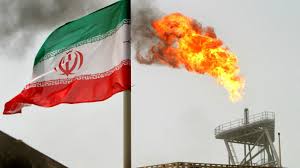
Over 5,000 oil workers on contract went out on strike in southern Iran at the South Pars refineries in the port city of Asaluyeh on Tuesday, Dec 9th, despite a heavy presence from State security forces, roadblocks, and threats from the authorities, including text messages
Workers from 12 refineries marched on the Asaluyeh governor’s office. This was one of the biggest workers’ demonstrations in nearly fifty years.
“The awareness, solidarity, and resolve of Iran’s working class, while independent organizing and collective resistance remain the only paths to securing workers’ rights,” the statement said.
At the same time, a three day strike began on nine onshore oilrigs and two offshore oil rigs of the North Drilling Company.
On December 10th, there were coordinated demonstrations throughout Iran, the biggest being in the capital, Tehran. There, 1,000 contract workers in oil, gas and regional electricity massed outside parliament and demanded the implementation of a job-status conversion plan approved nearly two years ago. The regime has failed to enforce this, leaving contract workers without job security, benefits like holiday pay, and on low pay.
The clerical government was accused by workers of deliberately delaying the law. The demonstrators were joined by other workers from state institutions.
On the same day, social welfare workers also demonstrated, saying that their pay no longer covers basic living costs.
At the same time, telecommunications workers in Shiraz held a demonstration over months of unanswered demands for wage adjustments and job security.
Other signs of labour unrest included a three day strike of steelworkers in Shadegan. In Isfahan, municipal cleaners went on strike and refused to collect garbage to protest unpaid wages.
Earlier, in the city of Yasuj on December 4th, there were widespread protests at the time of the visit of Iran’s President Masoud Pezeshkian. These were led by women, and accusing the government’s “water mafia” of being responsible for the destruction of the environment in the region.
Pensioners who had worked in the steel and mining industries demonstrated on a mass scale on December 7th in Isfahan. They were protesting against the plundering of pension funds by corrupt officials in the State administration. They rejected the regime’s excuses for economic collapse, chanting ,“Our enemy is right here, they lie and say it’s America.” Pensioners also demonstrated at the same time in Shush.
Telecommunication pensioners demonstrated in Tehran on December 8th ,blaming Supreme Leader Ali Khamenei for the looting of telecommunications resources.
There were widespread demonstrations throughout Iran on December 14th, with students, pensioners, oil workers, and bakers taking to the streets. Students had gathered at Tehran University the previous evening, to protest over the administrations new welfare policies, which have resulted in soaring costs for food and accommodation.
The Sunday demonstrations affected Shush, Kermanshah, Isfahan, and Ahvaz, with pensioners and steel workers turning out and slogans of “Inflation and high prices are theft from the people’s pockets.” Perhaps these slogans were at the most radical in Ahvaz , with “No threat, no prison, no execution stops us,” and “Death to managers, from Khuzestan to Tehran.”
In Khuzestan, 1,500 contract workers at the North and South Azadegan oil fields demonstrated outside the governor’s office, against privatisation, which they fear will lead to massive layoffs and loss of job security.
In the province of Fars, steel workers were on strike for the second day, and at Takab gold mine workers massed at the entrance of the mine with the banner “Enough is enough, we will no longer wait for the repetition of hollow promises.” They demanded an end to wage discrimination and immediate payment of overdue benefits.
As can be seen, these protests by workers, pensioners and students seriously threaten the theocratic regime in Iran, and look towards drawing other sectors into struggle. This despite the threat of death sentences and severe repression by State forces. Let us hope that this unrest increases in volume and topples the murderous and corrupt regime.