
We publish below an article from the newsletter of the Unione Comunist Anarchi d’Italia-UCADI (Anarchist Communist Union of Italy)
The Suez Crisis of 1956 can rightly be considered the end of French and British colonial ambitions. Faced with Egyptian leader Nasser’s nationalization of the canal, the two nations attempted to force a return to the previous situation, but the US urged them to calm down.
At the time, it was still necessary to make it clear that France and the United Kingdom were no longer masters of the world and that colonialism was nearing its end . Seventy years later, we are facing a similar event that could mark the end of the American empire, with the difference that this time the crisis was induced not by external forces, but by the empire itself. Iran could not have unilaterally imposed control of the strait: the entire world would have revolted. However, the US provided an opportunity by militarily attacking Persia.
But how important is the Strait of Hormuz? Quite a lot, until the railways envisioned by China’s Belt and Road Initiative are completed . Let’s start with the fact that, as has been repeatedly repeated, 20% of the world’s oil passes through Hormuz, a significant figure compared, for example, to the 5% that was blocked by the 1973 crisis. Add to this that today’s Western world is less equipped to absorb the crisis: Western nations are burdened by monstrous debts. The United States itself benefited from the crisis in 1973, taking advantage of the situation to impose the dollar as a bargaining chip and encourage domestic investment. All this to the point that, as few know or remember, the United States itself worked to block the first Arab mediation proposals.
Even greater increases in the price of oil were fine as long as it was exchanged in dollars: this was the birth of the famous petrodollars , still in operation today. Today the situation is different. The United States is the largest oil producer and is profiting from an increase in the price, but those who profit are the oil companies; The US middle class, far poorer than in the 1970s, is having a hard time digesting an oil price increase in a country where, on average, people drive 60 km a day. Furthermore, not all oil is created equal, both in terms of how individual refineries operate and its end use. Thus, while the US exports oil, it also imports it, and the price of oil is universal (even with differences between various qualities), and imported oil inevitably contributes to inflation (not to mention that, of course, oil companies take advantage of the situation to impose unjustified domestic price increases).
Furthermore, the current shortage isn’t something that will disappear as soon as the political situation resolves; we’re not dealing with taps that open or close on command. Following a prolonged crisis, closed wells become contaminated by sand or other materials used to facilitate extraction, making cleanup necessary, regardless of any damage caused by the war. Bottom line: it will take several years before optimal supply returns. For gas, the situation is even more complicated because of the liquefaction plant, which is necessary to make the gas transportable, and which itself requires maintenance once shut down. It’s also worth remembering that only 20% of gas is used for heating: 80% goes to industry, which is therefore severely affected by a gas shortage.
The closure of the Strait of Hormuz, however, has other implications that are little discussed by the media. Perhaps the main consequence concerns fertilizers. To put it simply, if fuel is less available, you can use your car less often, cutting down on some trips, or you can return to teleworking predominantly; however, you can’t stop eating. In countries like India or continents like Africa, where there are large percentages (and even absolute numbers) of very poor people, the lack of food risks triggering an unprecedented humanitarian crisis. But even in developed countries , the growing impoverishment of the middle class has increased the percentage of the population struggling to make ends meet. We’re once again seeing bread riots.
Why and how are artificial fertilizers important? They serve to increase yields, leading to up to a doubling of the land’s productivity. This factor was already clear to the Germans during World War II, who “imported” truckloads of highly productive black soil from Ukraine to Germany. Between 20% and 30% of the fertilizers transported by sea transit through the Strait of Hormuz, and the percentage increases to nearly 50% for urea, which can be thought of as the fuel for plants, allowing for the efficient transport of nitrogen, the primary chemical element necessary for life on earth (all thanks to the storage of ammonia, the transport of which would otherwise be unsafe). Another ingredient transported through the Strait of Hormuz is sulfuric acid, used (among other purposes) as an acidity regulator to increase the efficiency of the fertilizers themselves.
For now, this bottleneck is being discussed little, both because the media lives primarily on the distribution of press releases rather than the pursuit of information, and because the impact will be felt in a few months, coinciding with the large summer harvests, when the reduced production will become apparent, resulting in higher prices.
The problems generated by even a partial closure of the Strait of Hormuz don’t end with fertilizers: helium is another crucial element. Helium is an inert gas that sits quietly and doesn’t react with anything. It is the product of radioactive decay and is found in small percentages in natural gas; this explains why it is produced in the Gulf countries. Its importance lies in the fact that it remains in a liquid state down to extremely low temperatures (4 degrees Kelvin, equal to -269 degrees Celsius): these are the temperatures at which the most advanced chips can be produced, the smallest ones (on the nanometer scale) needed for computers used by artificial intelligence. One of the main users of liquid helium is Taiwan Semiconductor Manufacturing Company (TSMC), which produces semiconductors used in the data centers of Microsoft, Amazon, Google, and others. This is essentially the core of the most advanced technology the US is desperately banking on to save its own back. A potential blockade in chip production could potentially be a boon to China, which is catching up in this sector. Incidentally, Russia is a major producer of helium (a byproduct of natural gas extraction). The reader is left to draw further conclusions.
Last but not least, aluminum is another element to keep in mind. It’s not a valuable metal; there’s little profit in producing it, which is why the US has virtually stopped producing it (if there’s no stock market profit, what’s the point of producing it). But aluminum is used in countless industrial products (except for cans, airplanes, trains, and cars) due to its lightness combined with strength, and it has the advantage of being easily recyclable: 40% of the aluminum imported by sea by the US comes from the Gulf. This is another reason to expect a reduction in industrial activity, contrary to the promises of the orange thug.
Incidentally, to highlight America’s shortsightedness in matters of planning (even if unrelated to the Strait issue), it should be remembered that gallium is a kind of byproduct of aluminum production. Strictly speaking, gallium is not a rare earth, but it is nevertheless a highly valuable metal used in the production of both semiconductors and fast-charging battery systems. However, large-scale aluminum production is needed to generate industrially usable quantities of gallium. When you pursue short-term profit and forget about planning!
It’s therefore clear how important it is to control the Strait and how serious the consequences of a prolonged closure could be, ultimately for everyone, but especially for America’s allies: the Japanese, Koreans, and Australians on the one hand, but also the Europeans and the Americans themselves. Russia is probably the most self-sufficient nation. It isn’t capable of producing the latest-generation chips, but it produces enough fertilizer, not to mention oil and natural gas, and it also has a decent aircraft industry (to keep costs low).
China certainly needs oil and gas, but it is equipped to withstand a complete closure of the Strait for more than a few months. However, it isn’t completely closed, and it should be added that China has increased imports from Brazil, Angola, and Malaysia. China’s calm is so true that it has halved its oil demand from Saudi Arabia.
Indeed, the Gulf countries appear to be the main losers, losing enormous revenues and subsequently having to invest simply to restore their infrastructure. As usual, being an ally of the US can be fatal (Kissinger, cit.).
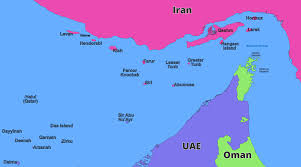
Trump openly told Zelensky that he didn’t have the cards; in this game, it seems the Iranians hold the cards (unless the nuclear powers involved in the conflict decide to blow the deal). In fact, the idea of ”opening” the strait is pure fantasy. The Iranian coast consists of hundreds of kilometers of high cliffs with natural caves capable of accommodating small, fast boats, not to mention the underwater tunnels built by the Iranians since the US invasion of Iraq, tunnels from which they can launch underwater drones with an autonomy of up to four days. Finally, let’s remember that the strait is called a strait because it is narrow and easily accessible by artillery; and the navigable part is even narrower.
Antonio Politi
Footnote: Wh o are the UCADI?
The Union of Anarchist Communists of Italy was founded in 2009 by class struggle activists who felt the need to engage in joint action aimed at developing anarchist communism. They intend to contribute to this goal by analysing the class struggle in Italy and internationally and providing a critical view of economic, political, and social relations.