

We publish below a perceptive article that appeared in the May issue of Courant Alternatif, the monthly magazine of the French Organisation Communiste Libertaire (OCL). JPD is Jean-Pierre Duteuil, who was a prominent figure in the March 22nd Movement at Nanterre University im May 1968.
On March 23 in Italy and then on April 12 in Hungary, the two governments personified by Meloni and Orban, fascist for some, simply neo-liberal for others, suffered an electoral blow at a high and strangely identical level of 54% rejection.
Our romantic and emotional side couldn’t help but rejoice in front of the television on the evening of April 12th when the results in Hungary were announced. Good news isn’t so frequent! But such is our nature that we have another, more rational side that can’t be guided solely by emotion! And then, disaster struck… Orban’s successor, the aptly named Magyar, is a staunch nationalist who defends the same line as his predecessor on immigration and LGBT rights. A former Orban protégé who wanted to become caliph in place of the Caliph. An ambition that suited a segment of Hungarian business leaders perfectly, as they needed more flexibility in their dealings with Europe while maintaining strong ties with Russia.
In Italy, Meloni wasn’t ousted by the ballot box, as Orban was. She simply received a resounding defeat in the March 23rd referendum on institutional reforms aimed at increasing government control over the judiciary by establishing oversight bodies selected by lot instead of elected by their peers. With a two million vote difference between “yes” and “no,” and a lower abstention rate (45%) than in previous referendums [ 1 ] , the blow was all the more severe because the election campaign focused more on Meloni herself and her government’s overall policies than on the judicial reform, the details of which were largely unknown except that it represented a further step towards state control over the judiciary.
It must be said that this reform involved a reshaping of the Italian Constitution, originally drafted by parties born from the Resistance—an icon that was untouchable. Modifying it could be seen as a revenge of the post-fascists, a way to get rid of a judiciary supposedly “red” and “friendly to undocumented immigrants.” Especially since Meloni, for the occasion, relaunched a campaign based on fear, order, and religion: if the “no” vote prevails, rapists, pedophiles, and illegal immigrants will be set free, she proclaimed endlessly!
It should also be noted that the vote confirmed the traditional divide between the north and south of the country: a resounding NO in the south (60 to 65%, and even 75% in Naples); a YES in the north, but limited to three regions (Veneto, Lombardy – Milan – and Friuli), since the NO vote prevailed in Piedmont – Turin, the Aosta Valley, and Liguria – Genoa. It is worth noting that Turin is associated with the resistance of the Askatasuna squat , the No TAV movement, and workers’ struggles in the automotive industry. Genoa is a major center of the pro-Gaza movement and port blockades, and Naples and Sicily have distinguished themselves in recent decades through anti-militarist demonstrations against NATO bases and Italy’s rearmament. Of course, this isn’t a simple cause-and-effect relationship, but it’s still worth noting that the recent wave of protests in certain urban centers hasn’t triggered a surge of fear and rejection among voters, despite the media’s efforts. The historical divide between Milan, the economic and financial capital, and Turin, the working-class city with its (former!) workers’ councils, remains.
According to post-election polls, the “No” vote prevailed with 62% among those under 35, while the “Yes” vote won with over 50% among those over 55. These results are undoubtedly significant, but they should be interpreted with caution, as all these studies treat each age group as a single category, without distinguishing between social backgrounds.
Yet, nothing compelled Meloni to undertake this judicial reform, much less to hold a referendum on it. So why? Either she was certain that a resounding “yes” vote would provide an opportunity to consolidate the government’s authority, in which case she would be criticized for being a poor strategist who doesn’t know her country well. Or she believed that, even with a modest victory or defeat, it would be an opportunity to reshape her government by removing her most unpopular ministers and reasserting her authority. This is precisely what she did as soon as the results were announced, dismissing two senior officials from the Ministry of Justice and the Minister of Tourism. The leader of the Forza Italia group in the Senate resigned and was replaced by the daughter of former Prime Minister Bettino Craxi under pressure from the Berlusconi clan, which finances Forza Italia but, more importantly, pursues an economic policy entirely focused on Europe. For Berlusconi, anti-integrationist leanings, such as the “Europe of Nations” concept, must remain purely ideological and detached from political and economic realities. This orientation is ultimately quite similar to that of Magyar in Hungary.
Consequently, more than the results themselves, what most appeals to both our rational and emotional sides is that the social movement, for its part, has not been extinguished by the electoral sequence as is often the case.
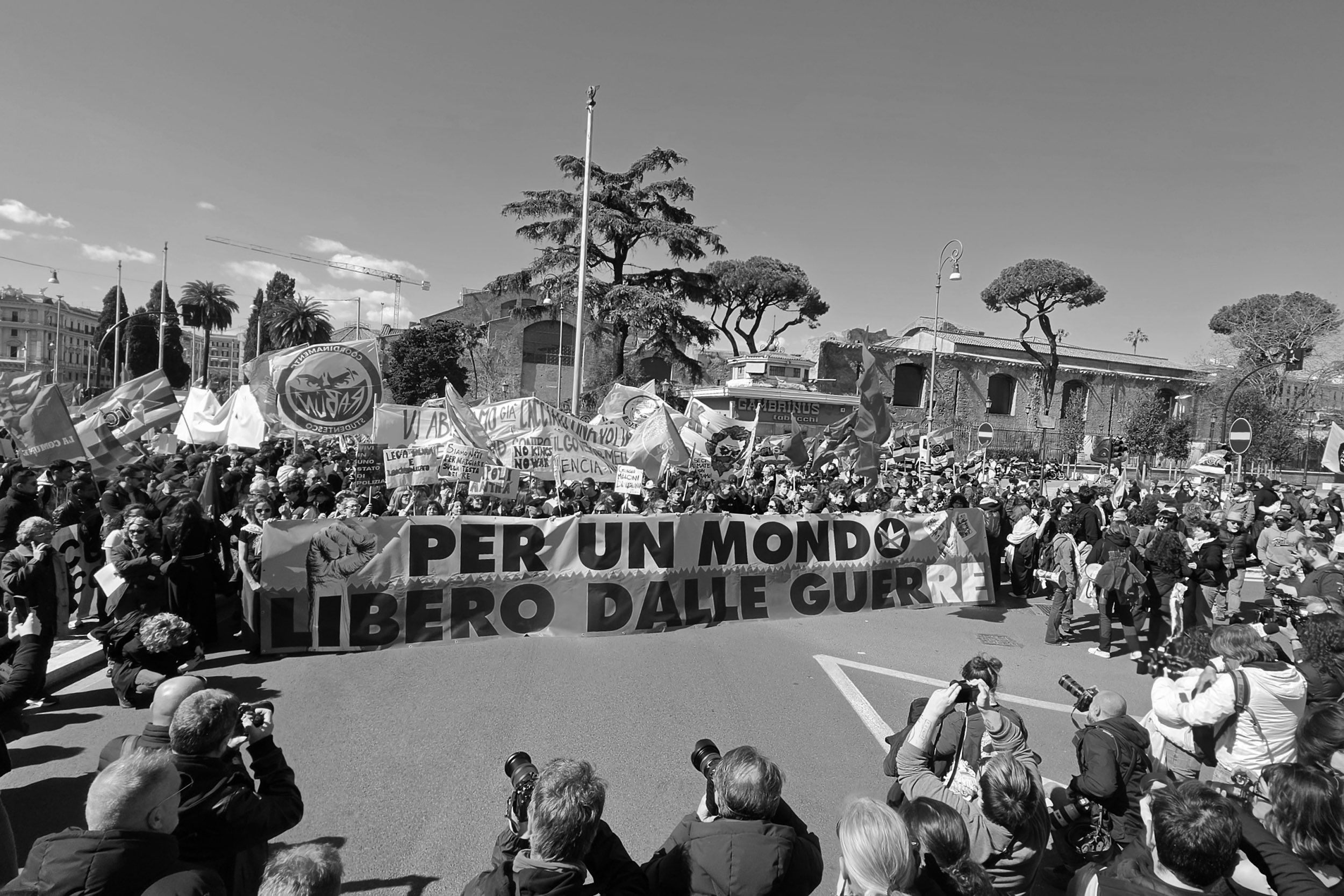
The “No to Kings and Queens” demonstration against the war drew nearly 200,000 people to Rome on March 28th, far exceeding the expected 30,000. While this success was certainly partly due to the uplifting momentum generated by Italy’s defeat, it’s clear that this was much more than a simple rejection of Meloni, and that judicial reform was merely a minor detail compared to the cries of “For a World Without War” and the yearning for a different Italy.
In Hungary, too, demonstrations with strong social demands continue, particularly among school-aged youth, although for now, “Europe, Europe, Europe again” is the dominant slogan. Let’s hope the Hungarian illusion quickly fades once the European mirage proves utterly incapable of resolving the ongoing decline in the situation of the working class.
JPD
Notes
[ 1 ] It should be noted, however, that this rate is much higher than that of the post-war years up to the end of the last century, when participation at one time approached 90%. The “Italian passion” for politics has, as in France, transformed into a fascinating mistrust