The annual Climate Change Performance Index (CCPI) has been issued. This is a tool used to see how well 64 countries (those which produce 90% of global greenhouse gas emissions) are doing at mitigating the worst aspects of climate change.
Obviously some places are doing better than others. Ireland is one country that is performing worse than the last time conditions were evaluated. There are complexities in the details, as with any real-world situation. Nevertheless, there are some bottom-line problems that are impossible to ignore.
The report says: “Despite superficially strong frameworks, the CCPI country experts note that progress on climate action is nowhere near sufficient…” It also states clearly “The experts criticise the lack of implementation of existing legislation, frequent introduction of exclusions, and limited understanding of the severity of the situation.” (https://ccpi.org/country/irl/).#
One of the major culprits in preventing progress is data centres. Here “The experts stress that progress in renewables deployment is falling behind surging energy demand. Data centres are the main driver, as they accounted for 23% of total electricity supply in 2025 and now exceed the demand of all households in Ireland. To meet the rising demand, the government has continued to support and even expand fossil fuel use instead of reducing dependence on imports.” (ibid)
So you have a country where the government talks the talk but in reality fails to keep its commitments and prefers to cosy up with big businesses that harm the environment. There should be no huge surprise in that. The experts who composed the CCPI report are hardly radicals and their work on the subject doesn’t exist in isolation. It is an international phenomenon that can be replicated to varying degrees across the world. The data speaks for itself and the idea that powerful people look after their own interests above everyone elses is something a lot of folks recognise.
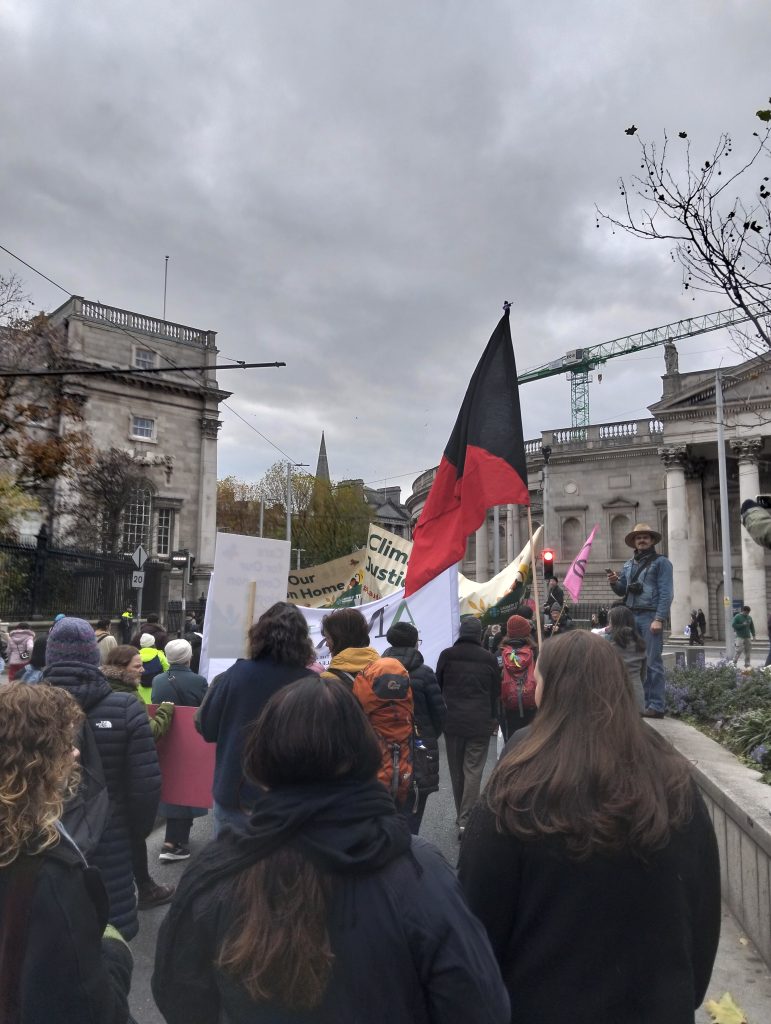
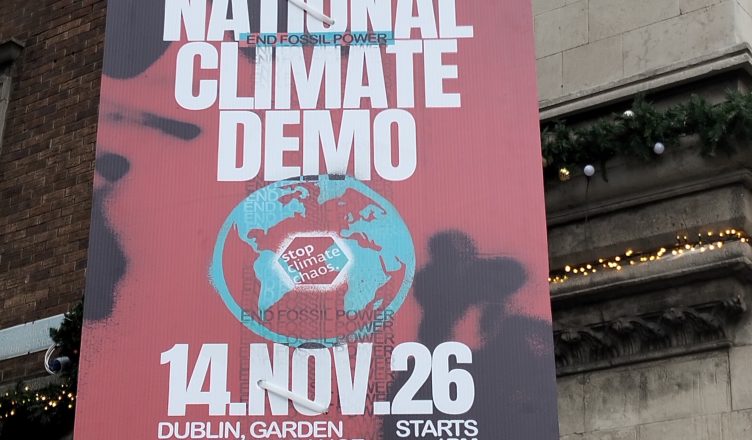
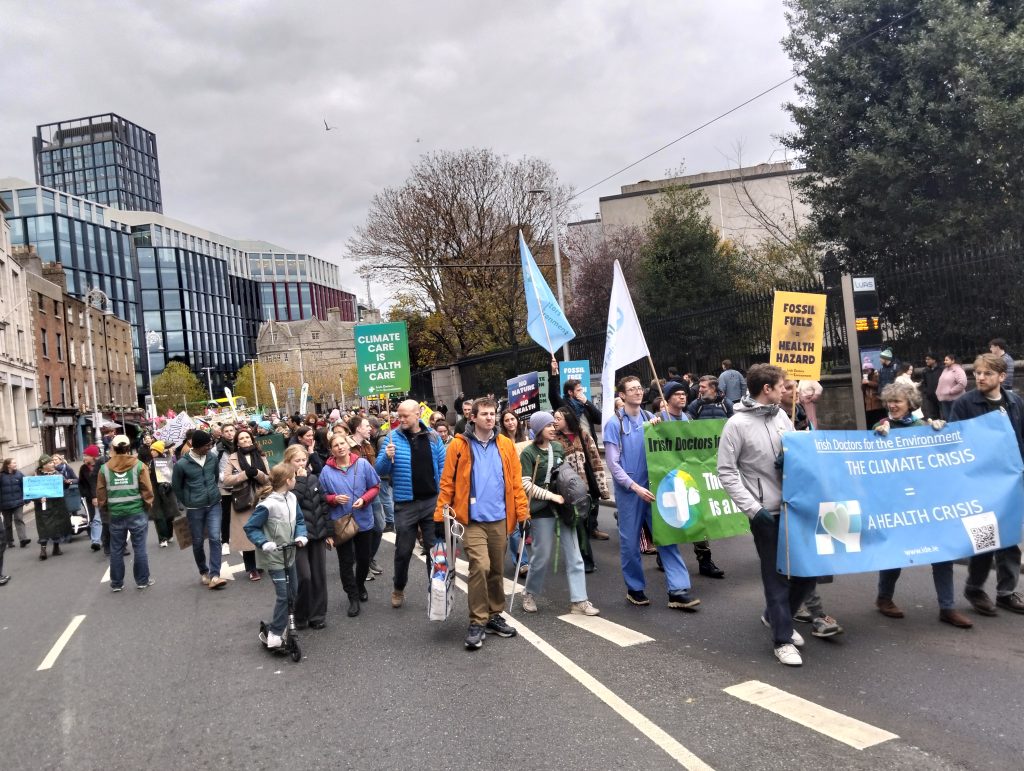
Evidence of this recognition came in Dublin, with a 5,000-strong National Climate Demo on November 14th, pre-dating the CCPI report by 4 days. In many ways the gathering was unremarkable. That’s certainly the case
in terms of the scheduling and route of the march. It took about an hour and went through the CBD and ended near the government buildings.
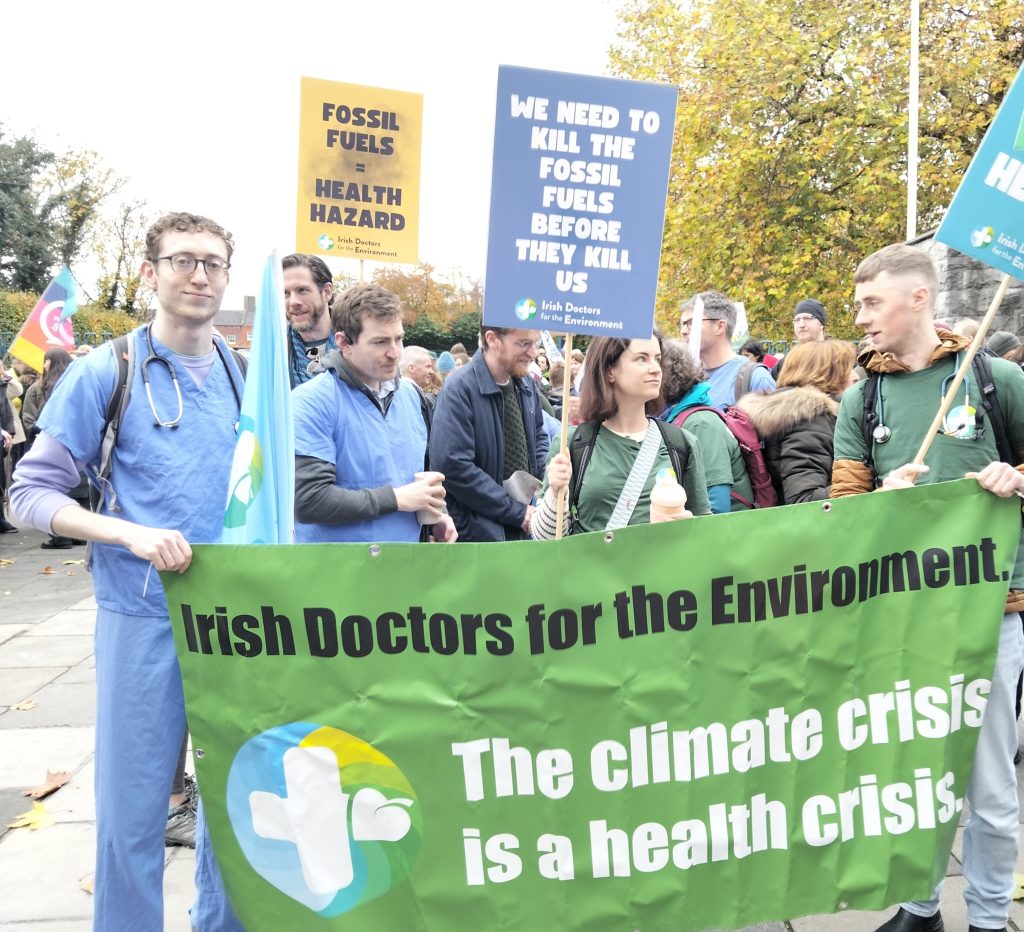
As with other recent demonstrations, the most impressive aspect of the action was the sheer range of people who participated. You could just about tick off an entire alphabetical bingo card of groups and individuals who joined. Everyone from anarchists to doctors, environmentalists to Palestinian protestors, Quakers to socialists and vegans. Those involved were aware of the seriousness of the issue, but there was a vibrancy to the march that manifested more as a colourful concern than a militant anger. That is probably to be expected in such a disparate crowd.
Its risky to assume too much, but given the overall tone of the demo, its likely many who joined would have favoured an approach similar to the writers of the CCPI report. Its an outlook characterised by recognition of a critical problem but calls on politicians to do this and that to ensure its resolution. For those of us with a more radical perspective, such demonstrations are an opportunity to initiate discussions and exchanges on why the latter view is faulty and to suggest alternatives.
It is probably fair to say environmental consciousness is currently high among the population at large, and especially so for those who actively join campaign groups and demos. The challenge is therefore not so much making people aware of the problem of climate change, as introducing them to ways of thinking or theories and methods they might not be familiar with.
Anarchists were approached during the November 14th action by fellow participants. The majority seemed curious about who we are and what we stand for. There used to be an active anarchist movement in Ireland from the 80s through to a few years ago (https://libcom.org/article/workers-solidarity-movement-closing-statement). Its not easy to maintain organisations and activity across time, and things are at a bit of a low ebb now. It has resulted in a bunch of folks (not always based on their generation or age) who aren’t familiar with anarchism or our organisations. It’s a shame, but we have to begin from how things are on the ground, not how we wish them to be.
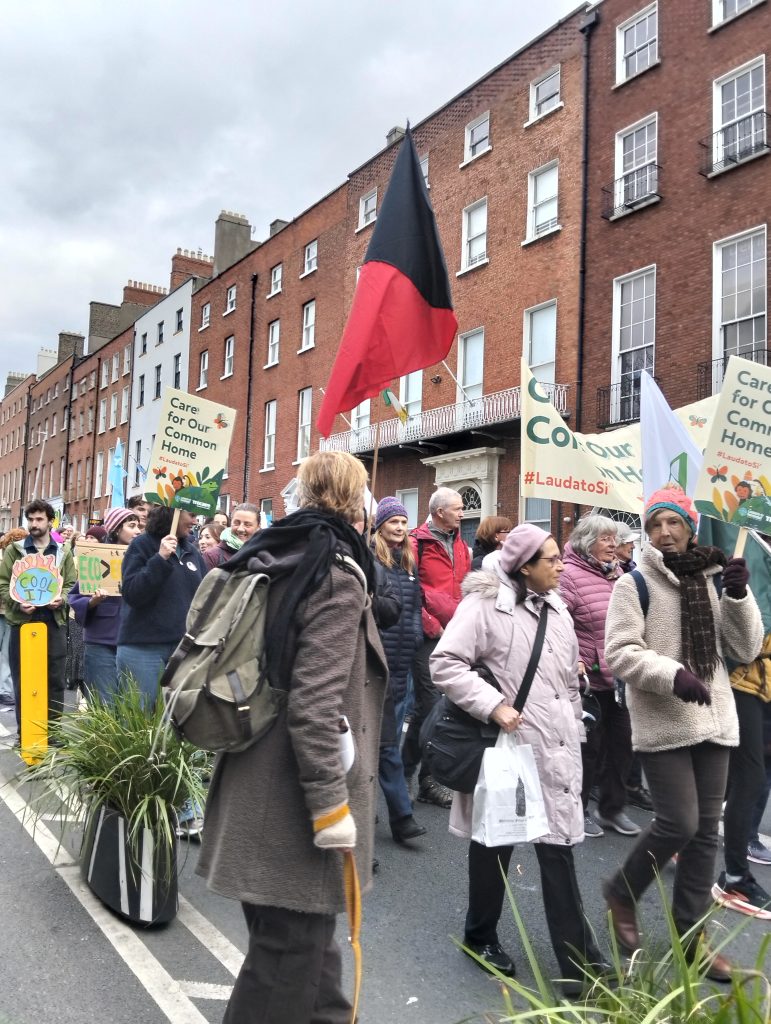
On the upside, the dearth of knowledge provides fresh opportunities to put our views across. During discussions on the climate demo, there was often common agreement about the nature of the environmental crisis but pleasant surprise when people had dialogues with us about possible solutions they hadn’t be aware of. Some contacts were initiated and ideas considered.
We need reliable information. We also need to be a pole of attraction for the many people who already have information but are stuck in dead-end approaches to using it. The experience of the National Climate Demo in Ireland shows in its own way, that some progress can be made in doing so.