
An ACG supporter writes:
Donald Trump visited Ireland recently. It was a two-day visit so he could play golf.
The estimated cost to the Irish taxpayer is reported to be in excess of 20 million
Euros (Clare Echo, 6/8/26). Not surprisingly, the visit caused controversy and
resulted in mass protests. The latter is a good thing. What is strange, however, was
the lack of enthusiasm for a protest held just one week later in Dublin.
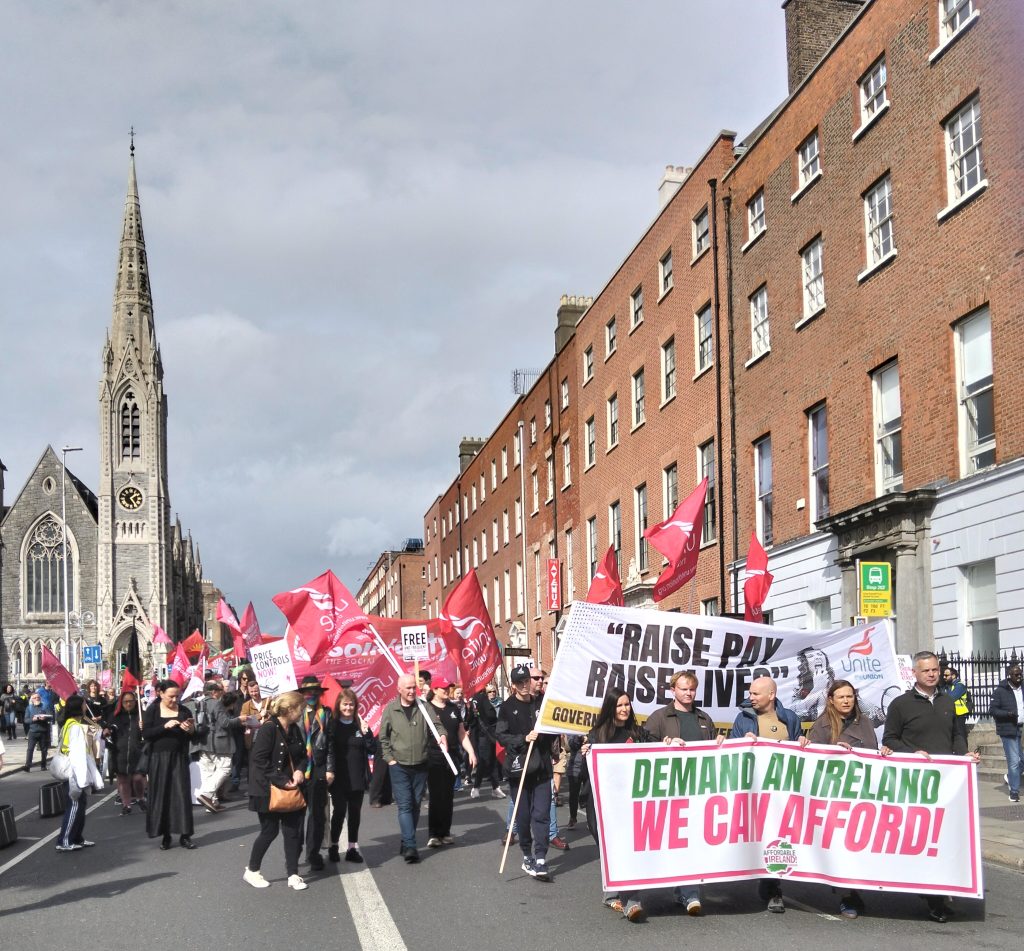
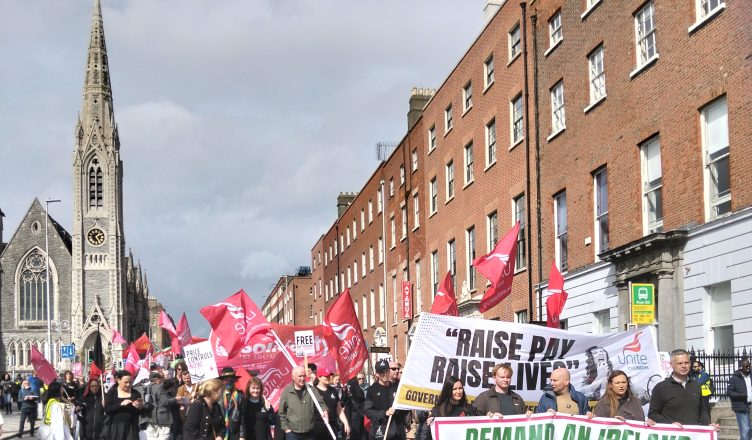
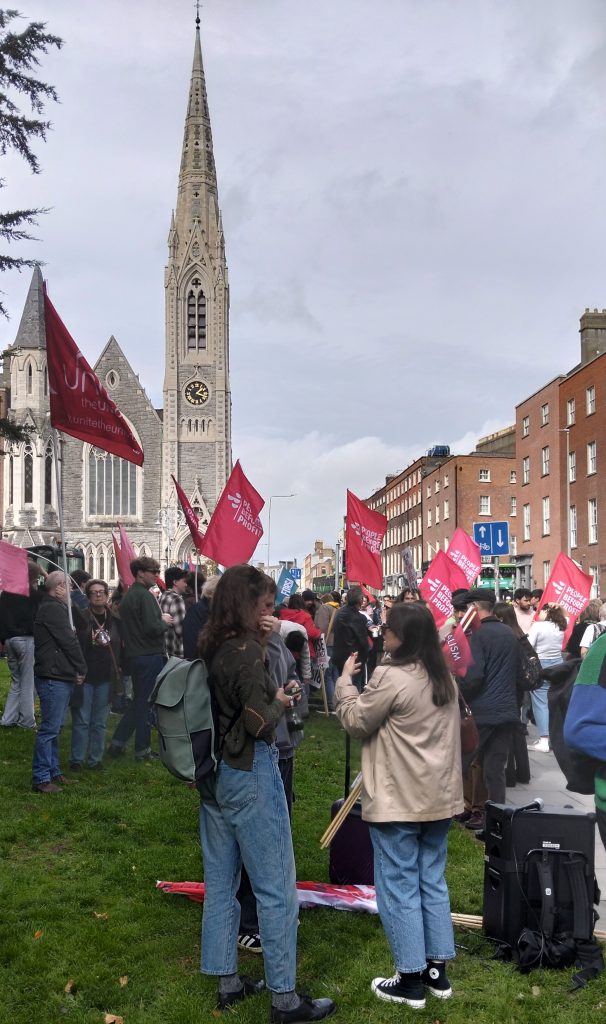
A protest was called for September 19 th in Parnell Square, Central Dublin, as a pre-Budget demonstration. The budget is due to be announced on October 6 th by Finance Minister Simon Harris on behalf of the right-wing coalition of Fianna Fail and Fine Gael. The government is sitting on a surplus, but indications are they intend to do little or nothing to help those in need of support.
There are a number of basic issues that highlight a social crisis in the 26 Counties. A big one is housing. Social housing is no longer being built people are waiting years on lists and private landlords are allowed to get away with exorbitant rents. It is not unusual for people to pay 40 or 50% of their income on rent. That’s if you can actually find somewhere in the first place. Many young people are living in the bedrooms they grew up in, since availability is as much a problem as affordability.
Outright homelessness is on the rise too. The Department of Housing figures show
that those in emergency housing increased 9.1% over the year to July 2026 (RTE
28/8/26). Among those was a 16% increase in families (Focus Ireland 28/8/26).
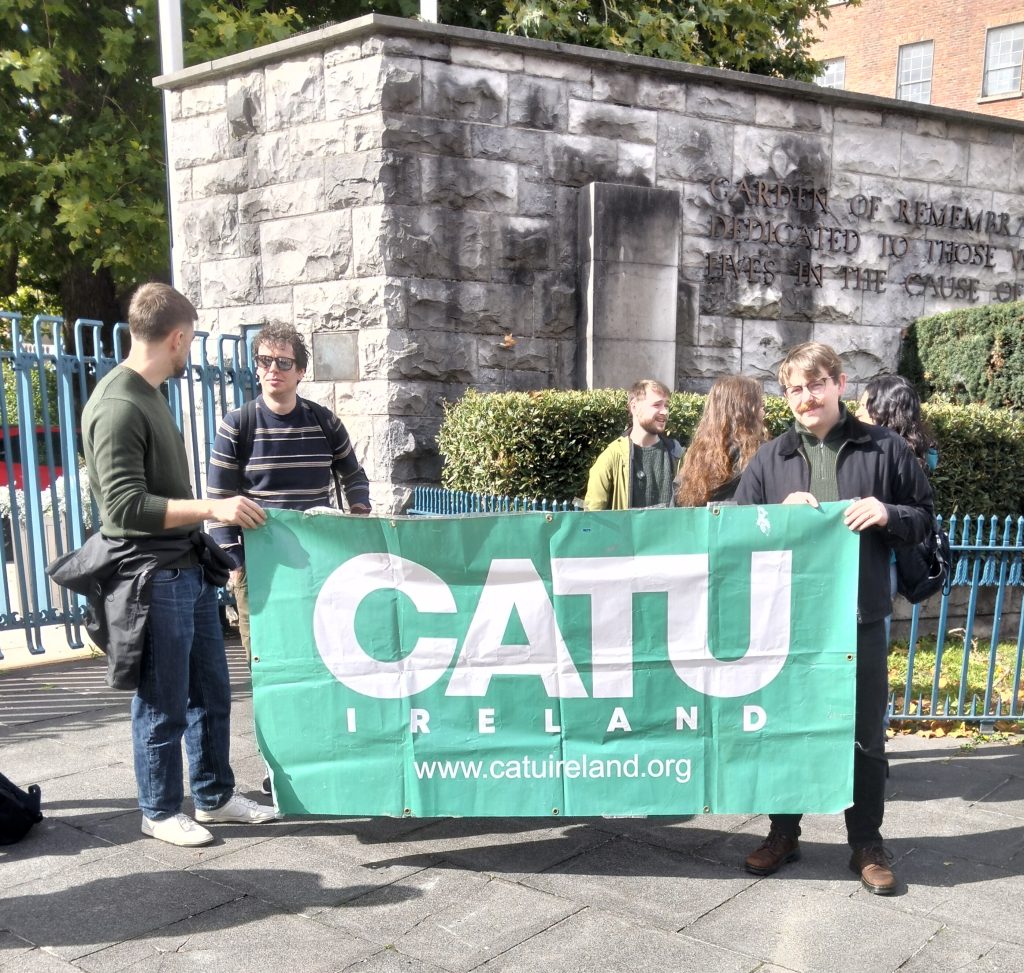
The problem does not only occur on a national level. The grassroots housing
campaign group Community Action Tenants’ Union (CATU) is battling against Dublin
City Council. Council executives have increased rents for tenants in public housing,
the excuse being that there isn’t money to keep public housing in reasonable
condition, so it will have to come out of rent increases. The increase voted on in April
offers no exemptions for pensioners, people on welfare, or disability recipients. For
many of those groups dependent on fixed incomes, any increase will further diminish
their quality of life.
Besides housing, another concern is basic resource infrastructure. Due to extremely
hot weather conditions, a hosepipe ban was enforced between July and the middle
of September in the Greater Dublin Area, and parts of Wexford, Wicklow, Meath,
Kildare and south Tipperary.
Uisce Eireann (UE) is the state-owned company that was responsible for overseeing
the ban. UE declared the prohibition “…for activities including watering gardens,
washing private vehicles and leisure boats, filling domestic swimming or paddling
pools, ornamental fountains and garden ponds except where such use is required for
commercial purposes [emphasis added]”, (RTE, 22/7/26). In other words, business
got a pass and the average person had to toe the line.
Although UE is a state company, it is in fact structured as a commercial semi-state
company with share holders. The two shareholders are government ministers. It is
clear from all this whose interests are seen to take priority. It is not the people at the
bottom.
In addition, electricity prices are rising. Several suppliers have announced increases,
with some already taking effect and others about to. For example, SSE Airtricity is
increasing electricity rates by 9.4% from October 5 th , with the typical bill rising by
about 8.9% or 172 Euros a year (The Irish Times, 4/9/26). Another is Pinergy, which
imposed a 7.6% increase (RTE 14/8/26). The result is on a straight Euro-per-kWh
measure, Ireland now has the highest electricity costs in the European Union (EU), at about 40% above the EU average! (ec.europa.eu). While the average person is clearly struggling to pay these increases, data centres and big tech companies (with the latter only paying 12.5% tax) pay wholesale rates for their water and electricity, while using a huge percentage of the national consumption. Its not too hard to see who the state favours.
Examples could be multiplied across various other aspects of the cost-of-living crisis.
One such being a 15% increase in public transport, announced to take place from
January (thejournal.ie 3/9/26).Many working people rely on buses and trains to
commute to work, and such increases only add to the burden we face. Anyway it
should be clear from the few cases we’ve looked at, that there’s a lot more to get
angry about than the brief visit by Trump. So surely, there would have been a huge
turnout at a protest centering on things that impact peoples’ daily lives the most?
No.
The pre-budget protest was held at a well-known and easily accessible site, on a
weekend at a time when many would be available if they wished to participate. The
weather was unseasonably good too. In the end, the turnout was in the low
hundreds. Participants consisted of TDs’ and members of the parties with
representation in the Dail (Sinn Fein, Social Democrats, People Before Profit), Unions
(Unite, Services Industrial Professional Technical Union- SIPTU), Disability and
Housing Campaign Groups (CATU), and a number of Marxist groups (Militant Left,
Communist Party of Ireland, Revolutionary Communists of Ireland, Solidarity etc).
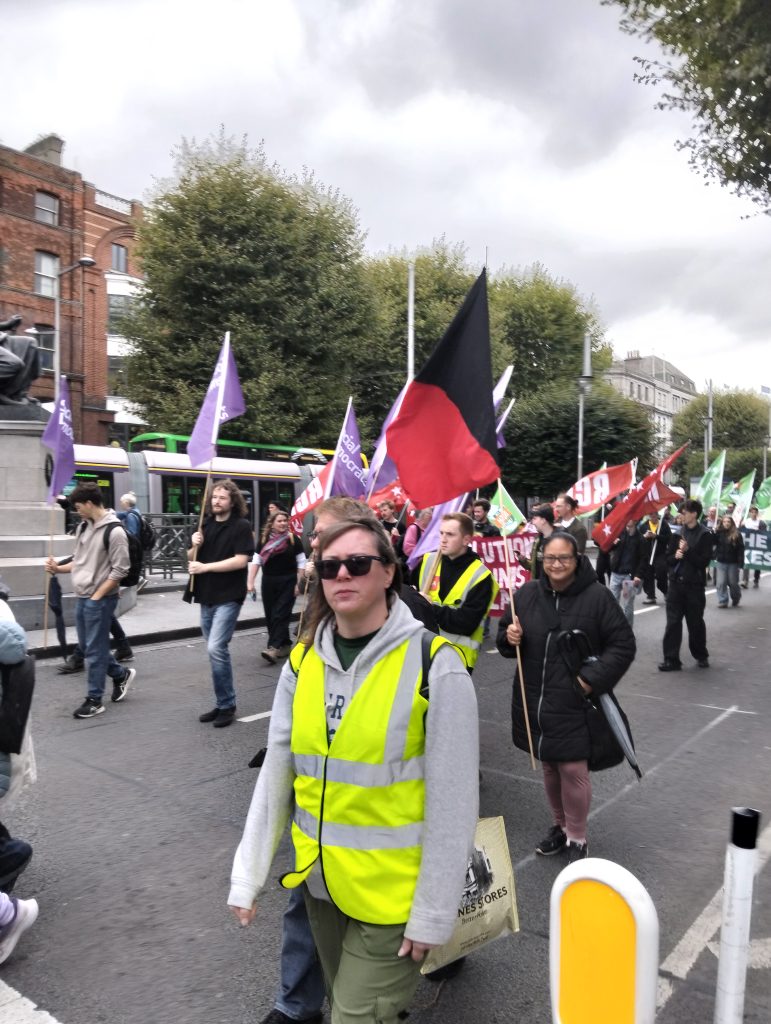
The march proceeded from Parnell Square down through O’Connell St, the main
street of Dublin. It was packed with shoppers. Some took leaflets but most just
stared, looking somewhere between confused and bemused. Of course, it isn’t easy
to tell, but there was no evidence that anyone among the bystanders decided to join
the procession. It continued, with each marcher sticking to her/his own contingent,
everyone using separate chants and slogans. The demonstration crossed the Liffey
River and ended about 15 minutes later outside the seat of government at Leinster
House. At that point there were a few speeches to the already converted, then
everyone went their separate ways, mingling back into the vastly bigger crowds of
consumers and tourists.
Its hard to know for sure why there is a disparity between the size of the problem
facing the working class and the limited participation in such protests. Nevertheless,
some honest effort has to be made to figure that out.
One uncomfortable factor we need to acknowledge is the success capitalism has had
on a super-structural level, particularly after 40+ years of onslaught on us in its Neo-
liberal form. We are encouraged to see ourselves as atomised units competing in a
market place, as individuals rather than as part of a working-class that shares a
common relationship and circumstance. Some people therefore probably support
the coalition parties because they actively believe its in their personal interests to do
so.
Another aspect is that those few organisations that do exist to defend us as workers,
have been shaped by the ideological attack. SIPTU participated in the recent march.
They claim to be the largest Trade Union in Ireland, with almost 200,000 members.
They formed in 1990, when the most ruthless elements of the ruling class globally
were attacking union rights and denying any role to them as legitimate players in the
system.
Looking at their website, SIPTU actually have a section entitled ‘What is a Union?’
which is indicative of the fact that generations have grown up with no knowledge or
experience of something that was once a working-class given. The site also has a
section entitled ‘Membership Benefits’, included among them being discounts on
insurance policies and airport coaches. It feels more like some kind of consumer
Christmas club than a body by and for people who want to fight the economic
system which is making their lives harder. Despite the boast about membership
numbers, SIPTU were able to provide barely a dozen people on the march.
To be honest nobody really expects a protest march to change the world, though
events in Russia in 1917 and at other times and places show that can happen in
certain circumstances. Most of the time a march is a symbolic, ritualistic thing. In this
case it felt like a chance for the opposition parties to be seen to be upset and for the
various Marxist sects to sell papers to each other. Its no wonder the average
bystander couldn’t see themselves reflected in the event. Joe and Joelene Public
don’t speak Leninese and don’t see politics as something they do themselves, but
something done to them. Many probably have a cynical attitude towards anyone
who promises great changes via the ballot box but then melts away from pledges
once in power.
O. K, so that’s the state of play. A massive problem exists within this system when it
makes the most basic aspects of human existence (housing, utilities, transport etc)
hard to perform. Rather than react to this with indifference, anarchists have to offer
something different. By putting out the message that various policies are not
isolated but in fact are part of an ideological jigsaw constructed by the ruling class,
we can begin to break through the barrage of capitalist propaganda.
Working people are not idiots. We have the experience of daily life to tell us that
putting your faith in others to work on your behalf, just ends in disillusionment and
cynicism. The state exists to support the ruling economic class. The parties in the Dail
that took part in the pre-budget march wish to replace the existing parties with
themselves. Small changes might result from that, but not the fundamental ones required. People have seen this happen so many times, so remain bystanders at
protests. A lot of folks also instinctively realise that the aliens from the Marxist sects
are spouting slogans approved by their mother-ship and would eventually just
replace the current system with one at least as brutal. Anarchists are uniquely placed
to advocate for people themselves working together at a grassroots level to directly
obtain change. Sure, that may involve protest marches, but ones where ordinary
folks determine how they are organised and function. We can and should work
alongside people, not over the top and despite them. We don’t have all the answers
and shouldn’t pretend to, but we can work with others to develop solutions.
The fact unions are in a weak condition is a reality. It may sound strange, but in an
unintended way, this has gifted anarchists and our allies an opportunity. A
widespread lack of understanding or experience of unions means we are able to
encourage working people to see them as potentially semi-revolutionary
organisations and can do so with a clean slate. Unions are not the sole body of
struggle, but they can be less bureaucratic, less hierarchical, run by those directly
involved in workplaces and if presented effectively, this will feel like the natural,
default setting.
The problems facing the working class are immense. A range of actions, including
protests and marches can be part of the fightback if composed and organised on a
different basis. We can never be sure that any of this will guarantee success but we
can be sure that doing nothing guarantees defeat. An anarchist perspective is one
that seems to have the best chance of getting us out of this mess. So let’s get out
there, advocate a path away from existing dead-end approaches and see what
happens. And yes…fuck Trump!