
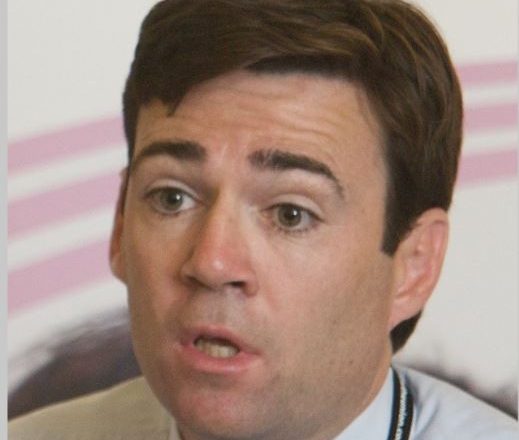
Photo: Keir Burnham, oops, Andy Starmer
The May councillor and mayoral elections showed the shifting ground of British politics. The two main establishment parties, Labour and the Conservatives, were decimated, and many, well those who bothered to vote, did so against the attacks both had led against working conditions and living standards of the working class. This disgust was expressed in Wales and in Scotland with votes for the nationalist parties, which adopt centrist to left social democratic language. Labour lost almost 1500 council seats, in England, whilst the Tories, with a much reduced 1,300 seats, lost a further 600 seats.
However, the biggest benefactors were the far-right populists of Reform, who won roughly 30% of the council seats up for grabs, including 14 councils. These included traditional Labour strongholds like Barnsley, Gateshead, and Sandwell. They came second after the Plaid Cymru nationalists in Wales and in Scotland grabbed 16% of the vote.
Farage and Reform are exploiting the anger felt by many with successive Tory and Labour governments, and fanning the flames of racism in British society. Many were disgusted with the way the Starmer government carried on with austerity measures like previous Tory governments. The vote for Reform appears to be higher in the most deprived areas. On the other hand, some working class voters voted tactically to block Reform. This wasn’t by any means a guaranteed vote for Labour, as the Greens won 500 councillors, an increase of more than 400.
In fact, the Greens seem to be filling the vacuum of social-democracy relinquished by Labour, with increasingly left-sounding promises. The nationalists of Plaid Cymru and the SNP use similar rhetoric to gain working class votes. Zack Polanski referred to the Greens as the ‘workers party’, and put forward a charter for workers.
However, like Green Parties in other parts of the world, and indeed with already sitting Green councillors and councils in the UK, the hopes of the Green Party posing a genuine alternative will soon be dashed. In over 40 councils they have helped implement cuts just like the rest. Where they now have wrested control, will they refuse to implement austerity measures?
Well, Polanski has said that councils have no choice in implementing cuts because it’s due to the decisions of central government. No mention of local organising of workers and local people in alliance with intransigent councillors, or a cartel of councils pledging to refuse to implement cuts. This doesn’t even enter his head!
The Labour government is deeply unpopular as a result of its first two years, where it attacked pensioners and pursued policies that showed it was jettisoning any idea of welfarism and left rhetoric. It blatantly is pro-business and pro-market.
Starmer sought to block any contenders to leadership of Labour back in 2021 when he increased the percentage of MPs needed to set off a contest from 10% to 20%. This has blocked the former Health Secretary Wes Streeting, himself an alternative Starmer, with a record of viciously attacking the NHS, and indeed, if anything, more Blairite than Starmer.
Sections of the Labour Party are panicking that under Starmer they will lose the next election. They are looking to Andy Burnham, Mayor of Greater Manchester, as someone to replace Starmer.
Andy Burnham is no fiery left winger. He supported the Iraq war when he was a MP, voting for the invasion of Iraq. He served as a minister under Blair, and over the next ten years he voted to block any independent inquiry into the war. He then opportunistically started to say that he regretted the war when he became Mayor of Manchester. Whilst in Parliament, he abstained on opposing welfare cuts proposed by the Tory government. He made it abundantly clear when Corbyn was elected Labour leader, that he was dissociating himself from the whole phenomenon of Corbynism. He supported Starmer in the 2020 leadership contest.
In addition, he was an important member of Labour Friends of Israel whilst in parliament, and has spoken regularly at their events. He says that Israel would be the first country he would visit if he became Prime Minister. He is a confirmed supporter of the Zionist state.
Now, however, in order to win the leadership election, (that is if he is actually elected MP in Makerfield) he has to pose as to the left of Starmer. So, he is calling for more funding for council housing and more re-nationalisation (indeed Starmer himself is changing direction over this, now calling for nationalisation of the steel industry).
Sections of the ruling class are concerned that Starmer cannot retain control over his MPs and continue its assaults on the working class. Therefore, Burnham is seen as a handy alternative, due to his supposed popularity, and better able to implement harsh measures. Burnham has said that he supports fiscal rules and so may well curry favour with sections of the boss class. He hopes to garner the racist vote by his support for anti-migrant action pushed by Home Secretary Shabana Mahmood. He has said that the government should spend more on defence, rather than health, education and infrastructure.
The past few decades of austerity and rising cost of living have dealt severe blows to the old establishment parties of Labour and Conservatives. Unfortunately, the vacuum that is opening does not benefit truly radical ideas, but offers new opportunities for the populist far right. Bigotry and racism are now fully out in the open. As for the left, whether they be the old Stalinist formations or the Trotskyist groups, they have been unable to develop any significant threat, tied as they are by an umbilical cord to Labourism. The majority of British anarchism, now much reduced, is also similarly unable to offer a challenge.
A social alternative is in dire need of being created. This has to mean painstaking work around the cost-of-living crisis, the rising cost of energy and food, housing, and transport. This crisis has been aggravated by the Trump regime’s war against Iran, and so a clear antimilitarist message has to be linked to any such fight against this crisis. Whether this alternative can be built remains to be seen. If not, the far right will profit.